May 11, 2026 · 5 min read
More AI output is not better work
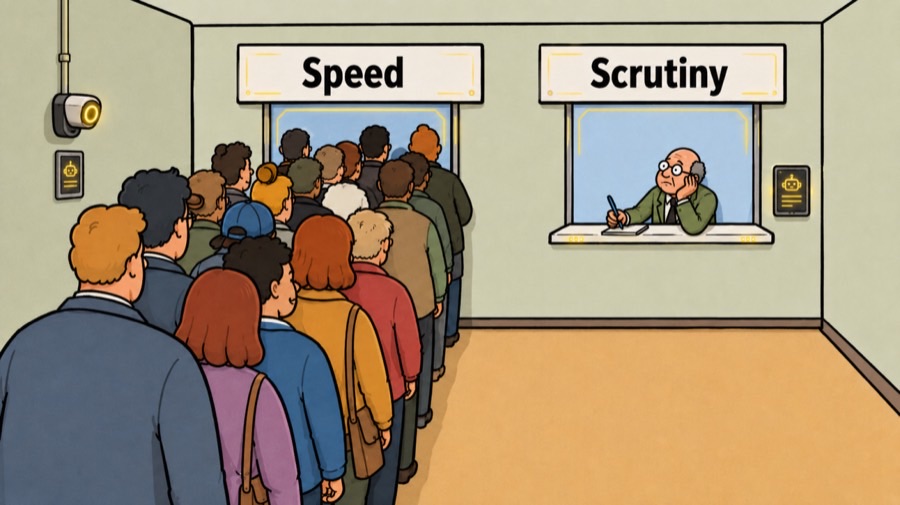
More output can create more review work. The better test is whether AI makes the next person’s work easier.
What changes
Useful AI output helps the next person act without extra follow-up.
Try first
Put these three lines at the top: decision needed, sources used, risk to check.
Listen to the long-form here to get a deeper dive into this article.
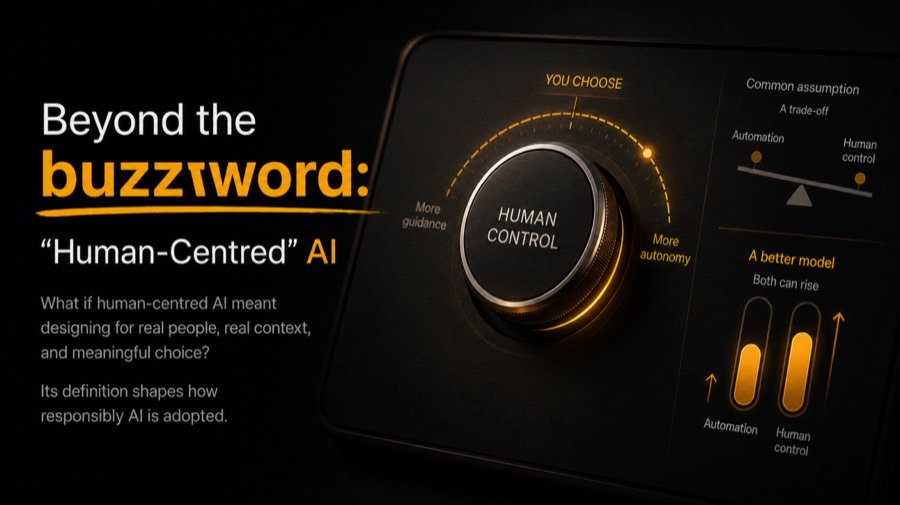
The real test of AI-human collaboration is whether it reduces work downstream.
TL;DR
The Observation
A manager sends an AI-assisted summary of employee feedback before lunch. They attached a PDF expert of the survey to the tool and instructed the tool to “pull out the main themes.” The response is polished, formatted well, and easy to skim.
The report displays "Main themes across the survey" with 5 generic bullets under each theme. By 3 p.m., the team is debating whether the summary captured what people actually meant, whether quieter concerns were flattened into broad themes, and whether the recommended next step fits the mood in the room.
The sender saved time creating the summary but the team inherited the meaning-making. That is where AI stops feeling like productivity and starts becoming workslop.
Merriam-Webster named “slop” its 2025 Word of the Year, defining it as low-quality AI-produced digital content and identifying “workslop” reports as a workplace version of the pattern (Merriam-Webster, 2025).
The Gap I Noticed
Use It At Work
Try one move on a real task.
Put these three lines at the top: decision needed, sources used, risk to check.
Work fails when people receive more material than they can turn into a decision. And with AI, the cost of producing that material is nearing 0.
That makes older research on information overload more relevant, not less. Eppler and Mengis (2004) found that information overload can weaken decision-making, learning, productivity, and well-being. The point is not that more information is always harmful. The point is that information becomes costly when someone has to sort, interpret, and repair it before they can act.
For higher-stakes AI tasks — a survey analysis, financial model, large spreadsheet, or board presentation — the issue is not volume alone. Someone still has to ask what was counted, what was excluded, what assumptions shaped the conclusion, and what decision the work is meant to support. The bottleneck moves from creation to interpretation. The cost lands on someone else’s desk.
The First Pass — Why More Feels Productive
AI helps with work that is slow to start. It can synthesize survey results, build a financial model, organize a large spreadsheet, shape a presentation storyline, or generate options for a decision.
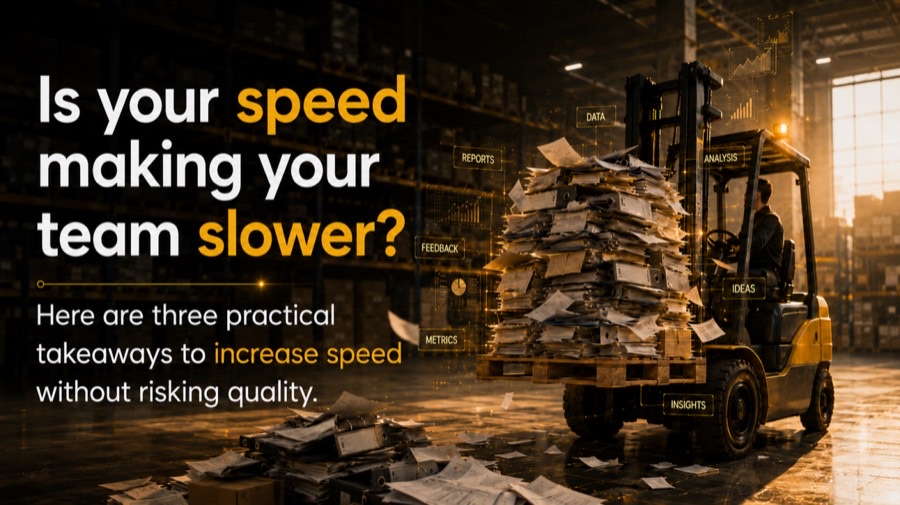
AI is becoming the forklift of knowledge work. It helps us move more material with less strain. But if the material is poorly packed — unclear purpose, weak evidence, missing context — speed only moves the problem farther down the line. The goal is to make sure the load is worth moving.
That is why speed alone is a weak signal. In research on interrupted work, people completed tasks faster after interruptions, with no difference in quality, but reported more stress, frustration, time pressure, and effort (Mark et al., 2008). The useful lesson here is that faster completion can hide the extra strain required to make the work hold up.
The Risk — Cognitive Surrender
The risk increases when the output looks analytical. Automation bias research shows that people can treat automated recommendations as a replacement for their own checking, even when the automated aid is imperfect (Skitka et al., 1999). That matters when AI produces a clean spreadsheet, polished chart, or confident recommendation because the format can make weak reasoning look settled.
Cognitive offloading adds a second risk. It can improve immediate performance while reducing later memory for the offloaded information (Grinschgl et al., 2021). In practical terms, someone may finish the analysis faster while understanding less about how the conclusion was reached.
Think of a new driver using Google Maps. They may reach the destination without learning the road names. If the tool gives a bad instruction, perhaps it doesn’t understand there is a traffic jam, the driver still has to notice and decide what to do next.
AI works the same way. If you ask it to draft the work, you still need to understand the work well enough to stand behind it.
The Value of Thinking Changes
The future of AI-human collaboration depends on where human thinking happens.
If AI helps with the first pass, humans need to spend more attention on the last mile: purpose, context, consequence, and judgment. AI has no comprehension of contextual consequences.
Human judgment shows up in small ways: noticing that a financial model hides a risky assumption, seeing that a presentation tells a clean story but skips the uncomfortable trade-off, or realizing that a survey summary is accurate but missing the decision history.
This matters because complex work rarely succeeds through individual output alone. Research on collective intelligence found that group performance was connected to social sensitivity and balanced participation, not just individual intelligence (Woolley et al., 2010).
In other words, the quality of the work depends on how well people understand each other, not only how much material they produce.
The Practical Path
Before sending AI-assisted work, run a 60-second check:
If you work in a team and use AI in your work, ask whether AI helped the next person need fewer clarifying questions, fewer corrections, and less follow-up.
Conclusion - The Second Pass
AI can help you produce more. The better question is whether the work holds up after it leaves your screen.
The value still depends on the human second pass: checking accuracy, adding context, reading the social stakes, and deciding whether the output reduces the work for the next person it reaches.
When the second pass is skipped, the work gets done later, by someone else, with less context and more frustration.
Put it to work
Use the ten-second handoff test.
- Can the receiver see the ask in ten seconds?
- Can they trace the strongest claim to a source?
- Can they reply yes, no, or change without a meeting?
Sources used6
- Eppler, M. J., & Mengis, J. (2004). The concept of information overload: A review of literature from organization science, accounting, marketing, MIS, and related disciplines. The Information Society, 20(5), 325–344. https://doi.org/10.1080/01972240490507974
- Grinschgl, S., Papenmeier, F., & Meyerhoff, H. S. (2021). Consequences of cognitive offloading: Boosting performance but diminishing memory. Quarterly Journal of Experimental Psychology, 74(9), 1477–1496. https://doi.org/10.1177/17470218211008060
- Mark, G., Gudith, D., & Klocke, U. (2008). The cost of interrupted work: More speed and stress. In Proceedings of the SIGCHI Conference on Human Factors in Computing Systems (pp. 107–110). Association for Computing Machinery. https://doi.org/10.1145/1357054.1357072
- Merriam-Webster. (2025, December 14). 2025 word of the year: Slop. https://www.merriam-webster.com/wordplay/word-of-the-year
- Skitka, L. J., Mosier, K. L., & Burdick, M. (1999). Does automation bias decision-making? International Journal of Human-Computer Studies, 51(5), 991–1006. https://doi.org/10.1006/ijhc.1999.0252
- Woolley, A. W., Chabris, C. F., Pentland, A., Hashmi, N., & Malone, T. W. (2010). Evidence for a collective intelligence factor in the performance of human groups. Science, 330(6004), 686–688. https://doi.org/10.1126/science.1193147